Sourcing office furniture from Taiwan offers access to high-quality manufacturing, flexible OEM capabilities, and a supplier base experienced in international trade. But for buyers new to Taiwan sourcing — or new to furniture importing in general — the process can feel complex. This step-by-step guide demystifies it.
Step 1: Define Your Product Requirements
Before you reach out to any manufacturer, document exactly what you need:
- Product type: Office chairs, bar stools, accessories, or a combination?
- Specifications: Key dimensions, weight capacity, adjustment range, materials
- Quantity: Your target order volume (this affects which suppliers will work with you)
- Customization needs: Are you selling under your own brand? Do you need custom colors, fabrics, or packaging?
- Compliance requirements: What safety or quality certifications are required in your target market? (e.g., BIFMA for North America, EN standards for Europe)
Step 2: Find Qualified Manufacturers
Online sourcing platforms: Alibaba, Global Sources, and Made-in-China list many Taiwan furniture manufacturers. Filter by “Taiwan” origin and look for suppliers with verified export history and product certifications.
Taiwan trade shows: Taipei International Furniture Show (held annually) and other trade fairs are excellent places to meet manufacturers directly, inspect product quality, and build relationships.
Industry associations: The Taiwan Furniture Manufacturers’ Association (TFMA) can direct you toward member companies.
Referrals: If you’re already importing other product categories from Taiwan, ask your existing suppliers for furniture manufacturer recommendations.
Step 3: Qualify Suppliers
Don’t go straight to ordering. Take time to qualify each supplier:
Request a company profile: Look for production capacity, years in operation, export markets served, and certifications held.
Ask for a product catalog: Does their range align with your needs? Do they have experience with products similar to what you’re sourcing?
Check references: Ask for contact details of existing international buyers willing to speak about their experience.
Request samples: Physical samples are non-negotiable before a first bulk order. Evaluate finish quality, mechanism smoothness, material durability, and packaging.
Step 4: Negotiate Terms
Once you’ve selected a supplier, negotiate:
- Unit price and MOQ: Prices typically decrease with volume. Establish your price at your expected order quantity.
- Incoterms: FOB (Free On Board) is the most common term for Taiwan exports. You pay for ocean freight from Taiwan; the supplier handles packing and delivery to the port.
- Lead time: Confirm production lead time from order confirmation to ready-for-shipment. Typically 30–60 days for bulk orders.
- Payment terms: T/T (telegraphic transfer) with a 30% deposit and 70% balance before shipment is standard. Letter of Credit (LC) is available for larger orders.
- Tooling costs: If your order requires custom mold creation (for OEM products), confirm tooling costs separately from unit pricing.
Step 5: Place a Trial Order
For first-time orders with a new supplier, consider a smaller trial shipment before committing to large volumes. This lets you verify:
- Production quality matches samples
- Lead time commitments are honored
- Packaging quality protects products during shipping
- Communication and documentation quality during production
Step 6: Manage Quality Assurance
Pre-production inspection: Confirm materials and components before production begins.
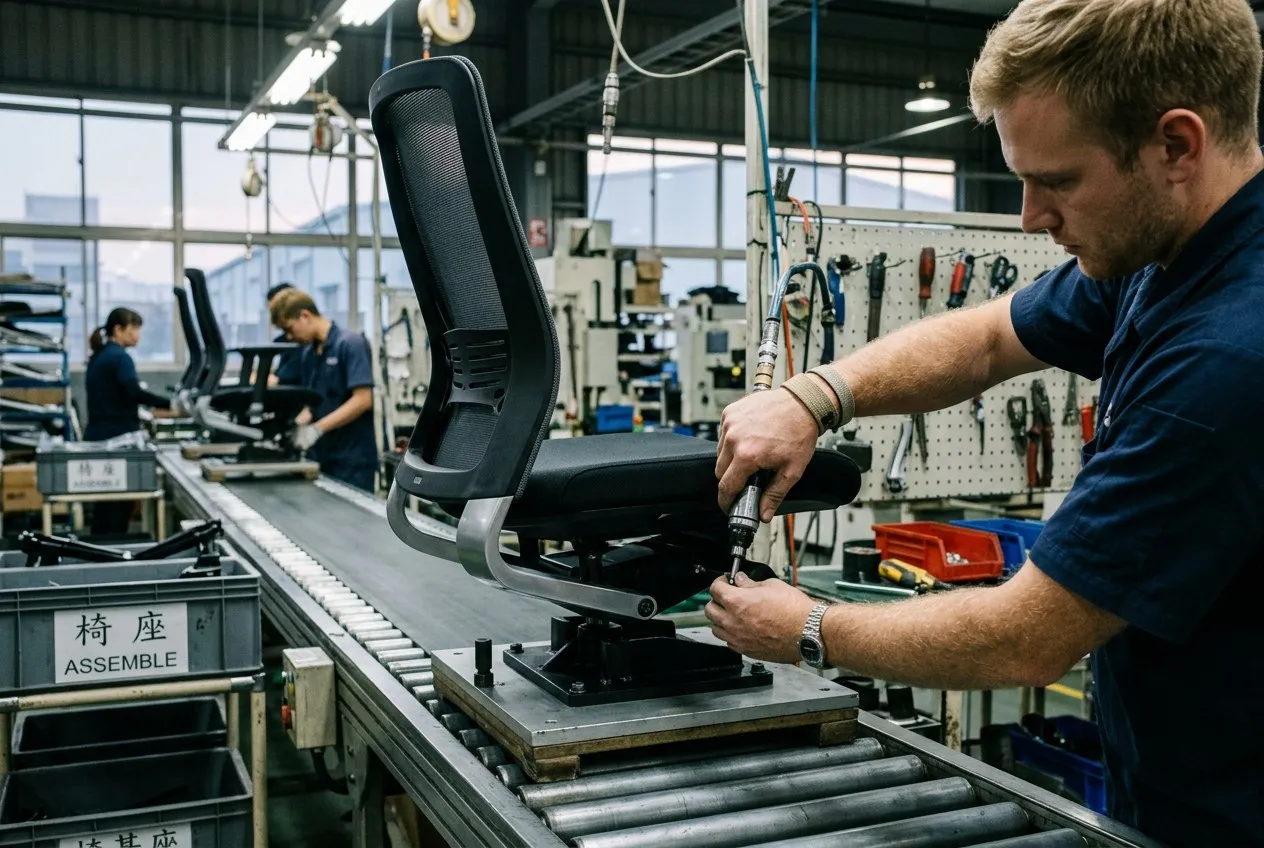
In-process inspection: Check quality at key production stages (frame assembly, foam installation, final assembly).
Pre-shipment inspection: A final inspection of finished products before shipping. You can hire a third-party inspection company (SGS, Bureau Veritas, Intertek) for independent verification.
Step 7: Handle Shipping and Customs
Freight forwarder: Work with an experienced freight forwarder familiar with furniture shipments. They’ll handle ocean freight booking, bill of lading, and export documentation.
Import duties: Research import tariff rates for furniture in your destination country. Taiwan-origin furniture may qualify for preferential duty rates under certain trade agreements.
Product certification documentation: Ensure you receive all test reports and certificates needed for customs clearance in your market.
CXstyle has been exporting office furniture and ergonomic accessories from Taiwan for decades. We’re experienced in international shipping documentation, compliance requirements, and OEM production for global markets.
Contact us to start your sourcing inquiry.